- About
- Support
- Celebration of the Arts
- Grants
- Programs
- News & Media
- Advocacy & Research
- State of the Sector in 2026
- 2025 ArtsFund Grantee Listening Sessions Program Overview
- Livability Impact Study of the Arts
- Policy & Advocacy Resources
- Building for the Arts
- How are the Arts Being Funded Today?
- What do Expenses Look Like Today?
- COVID Arts Sector Impacts
- COVID Cultural Impact Study
- Social Impact Study
- Economic Impact Study
Tacoma Refugee Choir – 2025 Accelerator Case Study
Tacoma Refugee Choir
Organization Name: Tacoma Refugee Choir
Website: https://www.refugeechoir.org/
Budget Size: $250K – $500K
Region: Southwest
County: Pierce
Artistic Focus Area: Music/Cultural Heritage
Community Accelerator Grant Award: $22,500 in 2023, $12,500 in 2024, $12,500 in 2025
Primary Impact Category: Employment, The Future
Mission Statement: Creating spaces for authentic expression, interconnection, and healing through song and music.
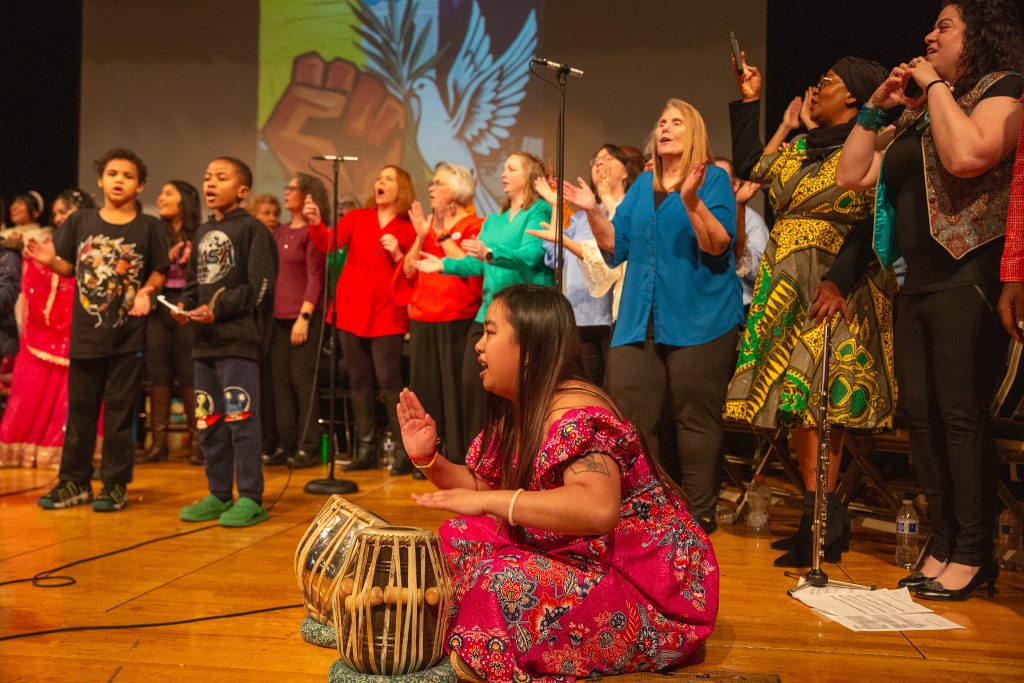
When ArtsFund last spoke with the Tacoma Refugee Choir (TRC) in 2023, Founding Executive & Artistic Director Erin Guinup enthused about a recent hire, Artistic Director Orlando Morales, whose background in music education and community engagement had quickly made him a major asset to the organization. This year, after two leadership transitions – one planned, when Erin stepped away from the choir, and one unplanned, when her replacement took a dream job close to family – Orlando is leading the choir as Artistic & Executive Director.
It has been a fascinating – and, in many ways, a uniquely challenging – year to take up that mantle. In February 2025, the National Endowment for the Arts abruptly updated their funding priorities, terminating many grant offers already made to arts organizations across the country and asking all future grantees to comply with new expectations restricting Diversity, Equity, and Inclusion programs, as well as programs “promoting gender ideology.”[1] Tacoma Refugee Choir opted not to seek 2025 NEA funding given these new restrictions; moreover, with TRC’s large gifts and grants down 40% this year, Orlando believes the federal government’s shift away from supporting the arts may have created a ripple effect. For the choir, this political climate has proved a challenge to navigate not just financially, but personally. As an organization focused on celebrating diverse cultures and bringing together refugees, immigrants, and allies through the power of singing, “I know,” Orlando says, “that all our members are feeling the stress and anxiety of this moment.”
Community Care
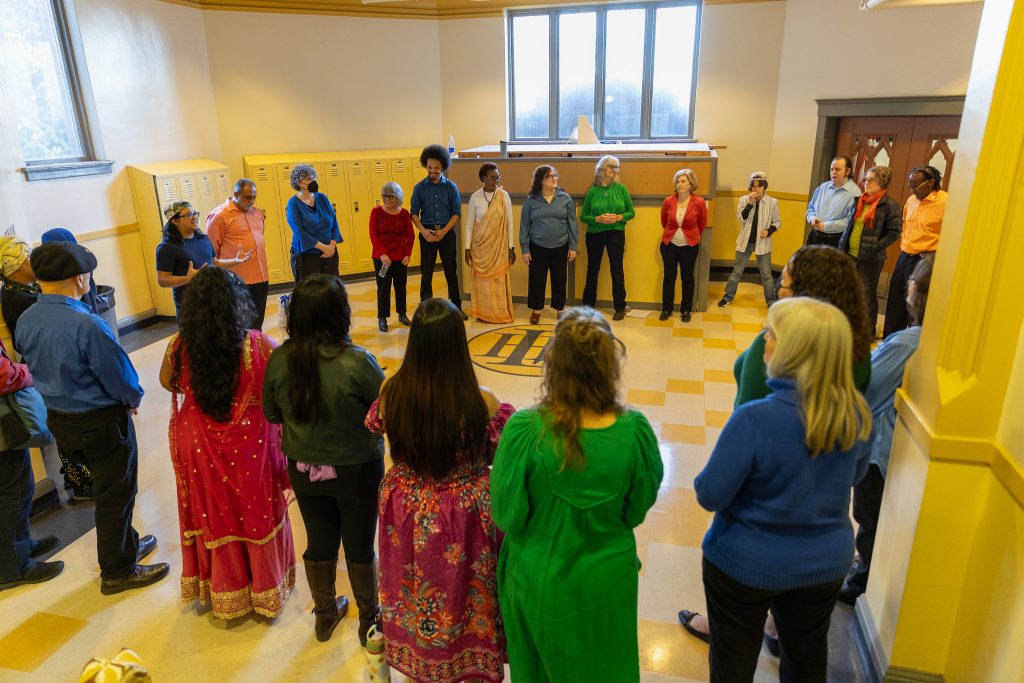
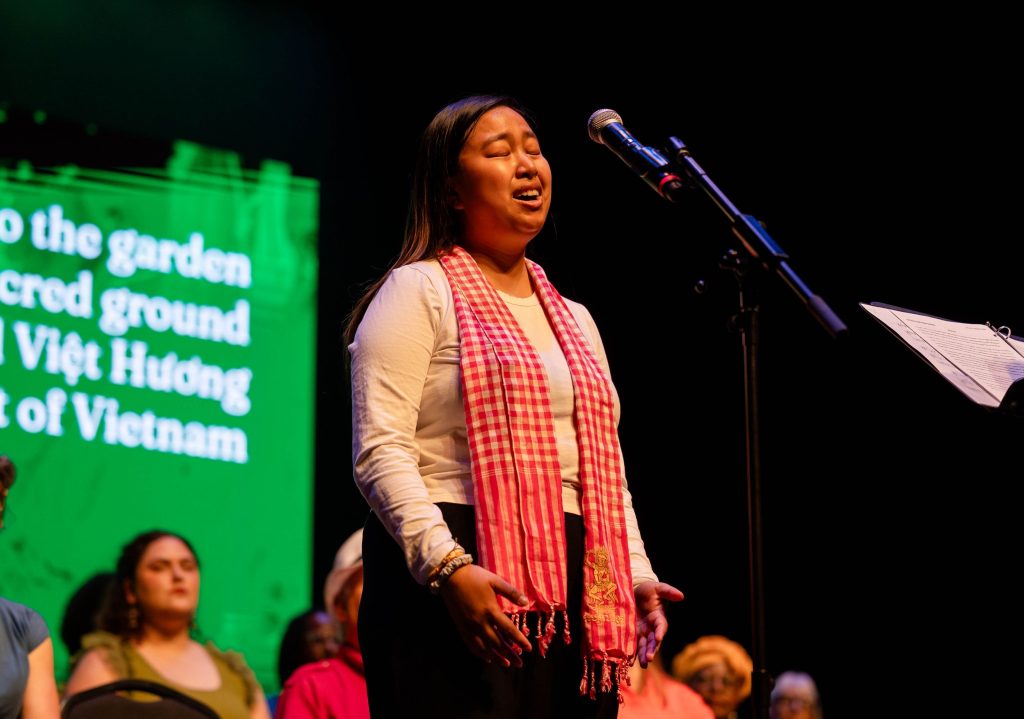
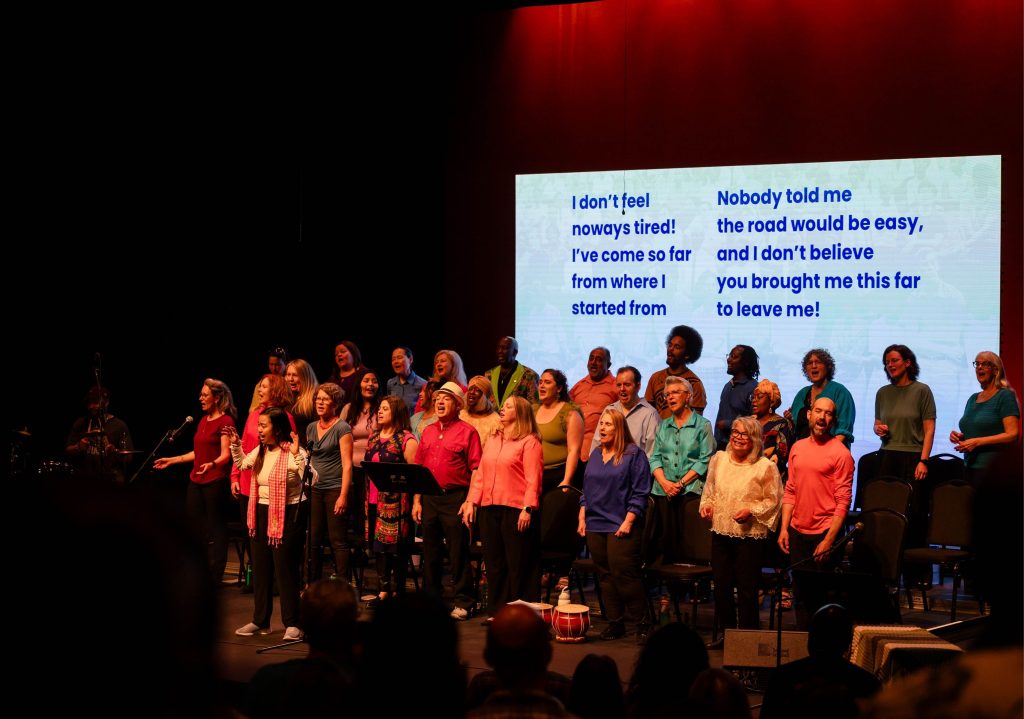
Fortunately, the Tacoma community has rallied around the choir in ways both large and small. Last summer, Tacoma Arts Live identified TRC as an organization that could benefit from their Accelerating Creative Enterprise (ACE) program, which serves as an incubator for BIPOC and women-led entrepreneurial ventures, small businesses, and nonprofits. “In the past, we’d really struggled with not having a regular space for rehearsals,” Orlando says. “Tacoma Arts Live has provided us with the security of a home to come back to.” The ACE program has also offered TRC free office space and concert production assistance, and several other community organizations have offered support in the form of free and discounted venues, social media features, and resource sharing, which has made it possible for the choir to continue – and even expand – their programmatic offerings. “Folks have stepped up to say that they value the work we do and want to make it easier, even if they can’t help out financially,” says Orlando. “We’re really grateful for that.” As TRC navigates the scarcity of arts grants and the ramifications of post-pandemic, sector-wide financial difficulties – including Tacoma Arts Live’s recently-announced decision to shutter in June 2026 – the Community Accelerator Grant has proved meaningful in helping the choir find their operational footing, even on rapidly shifting ground.
Culturally Responsive Music-Making
The choir’s 2025 award has primarily gone towards paying artists and program staff at professional rates. “Musicians outside Western classical traditions are often undervalued,” Orlando says. “It can be easy to say, ‘Well, this African drummer doesn’t have a polished resume, so we can compensate them less.’ It’s a top priority for us to maintain our rates across the board.” As more and more Tacoma schools have started requesting Tacoma Refugee Choir residencies this year, funding has allowed TRC to meet those requests, bringing teaching artists and culture bearers into eight choir classrooms (up from three when Orlando joined the choir in 2023) and providing linguistically and ethnically diverse singing and learning opportunities. “The people we bring in really expand kids’ viewpoints of what mentors can look like and what different people can bring to the table,” Orlando enthuses. “For some, it’s reflecting back their own culture and giving them opportunities to share songs and traditions they’re already familiar with. For others, hopefully it’s counteracting some of the things they’re seeing in the news about immigrants and refugees.”
“The Community Accelerator Grant has allowed Tacoma Refugee Choir to bring in visiting artists for free public events, including a recent workshop on Venezuelan folk music: “The news was full of stories about Venezuelan gangs, all kinds of terrible, negative things, but this was our best-attended workshop of the year. It feels like we’re really using this funding to move the needle here in our neighborhood.”
- Orlando Morales, Artistic Director
Grant funding has also made up fundraising deficits Orlando attributes both to the federal ripple effect and this year’s dual leadership transitions, as many grantmakers and individual donors value leadership consistency and thus shy away from giving to organizations with freshly minted leaders. The support has given the choir time and space to thoughtfully and intentionally move towards an organizational model deeply aligned with their mission, vision, and values. “We’ve been figuring out how to step away from a more conventional model of arts organization – an artistic director with a vision plans a season and gets everyone else on board – to a more committee-led model, where a group suggests songs, brings in songs from their traditions and life experiences, or writes and composes songs that speak to the moment. We’re learning how to organize and make decisions and reach consensus,” says Orlando. “Especially as things in the world have started changing, the idea of championing a new way to think about how arts organizations can be truly culturally responsive has become very interesting to us.” Drawing on his community organizing experience, Orlando has led the choir in establishing committees overseeing programming, partnerships, events, performance requests, and safety, which have already provided opportunities for singers to grow as leaders and take ownership over TRC’s trajectory.
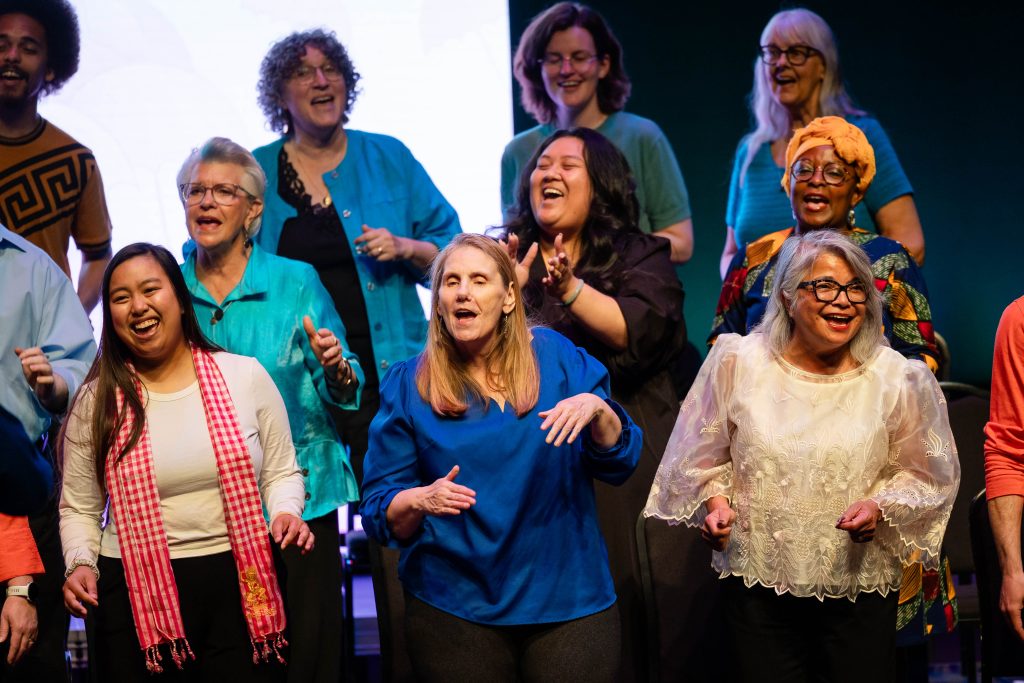
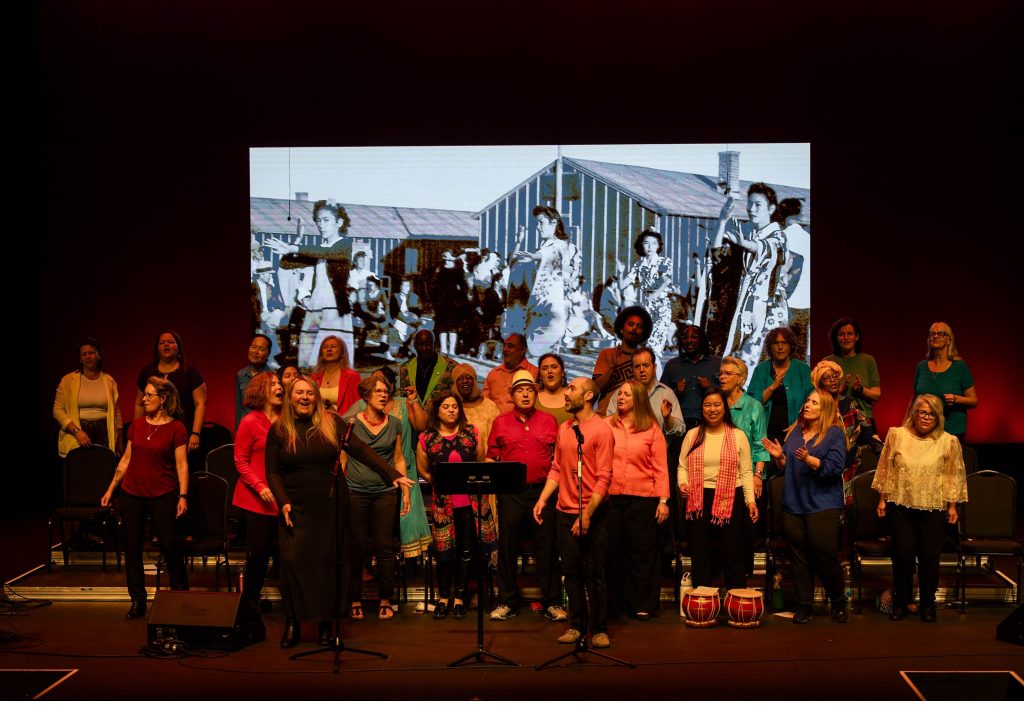
While the year has certainly not been easy, Orlando and his choir feel galvanized rather than defeated. “To speak personally,” he shares, “when I joined [TRC], it just seemed like a really fun community choir. And that’s still true, but there’s an added layer now: There are narratives out in the world that we know are false and we need to counteract them by offering true stories of folks and their experiences that will help foster a better sense of community connection, a more welcoming attitude, more compassion. As bleak as things can look nowadays, when we all get together as a choir to rehearse, or sing at events in support of immigrants or refugees, our choir embodies and reflects back joy. That is our biggest superpower, and that’s what sustains and grounds us and keeps us coming back. We are joyful resistors.”
References
[1] These policies were found unconstitutional in September 2025 and were subsequently softened by the NEA.