- About
- Support
- Celebration of the Arts
- Grants
- Programs
- News & Media
- Advocacy & Research
- State of the Sector in 2026
- 2025 ArtsFund Grantee Listening Sessions Program Overview
- Livability Impact Study of the Arts
- Policy & Advocacy Resources
- Building for the Arts
- How are the Arts Being Funded Today?
- What do Expenses Look Like Today?
- COVID Arts Sector Impacts
- COVID Cultural Impact Study
- Social Impact Study
- Economic Impact Study
Kalispel Indian Community – 2024 Accelerator Case Study
Kalispel Indian Community, Culture Department
Website: kalispeltribe.com
Budget Size: Greater than $1M
Region: Northeast
County: Pend Oreille
Artistic Focus Area: Cultural Heritage
Community Accelerator Grant Award: $25,000 in 2024, $22,500 in 2023
Primary Impact Category: Financial Impact
Mission Statement: Our land and our ancestors mean everything to us. They have always sustained us, and today, in new ways, they will continue to sustain us into the future. The foundation of our hospitality is nourishing and giving. Our strength is cordial and honorable. Gratitude and respect are expressed for the prosperity we share. In the future, we hope for a wonderful life.
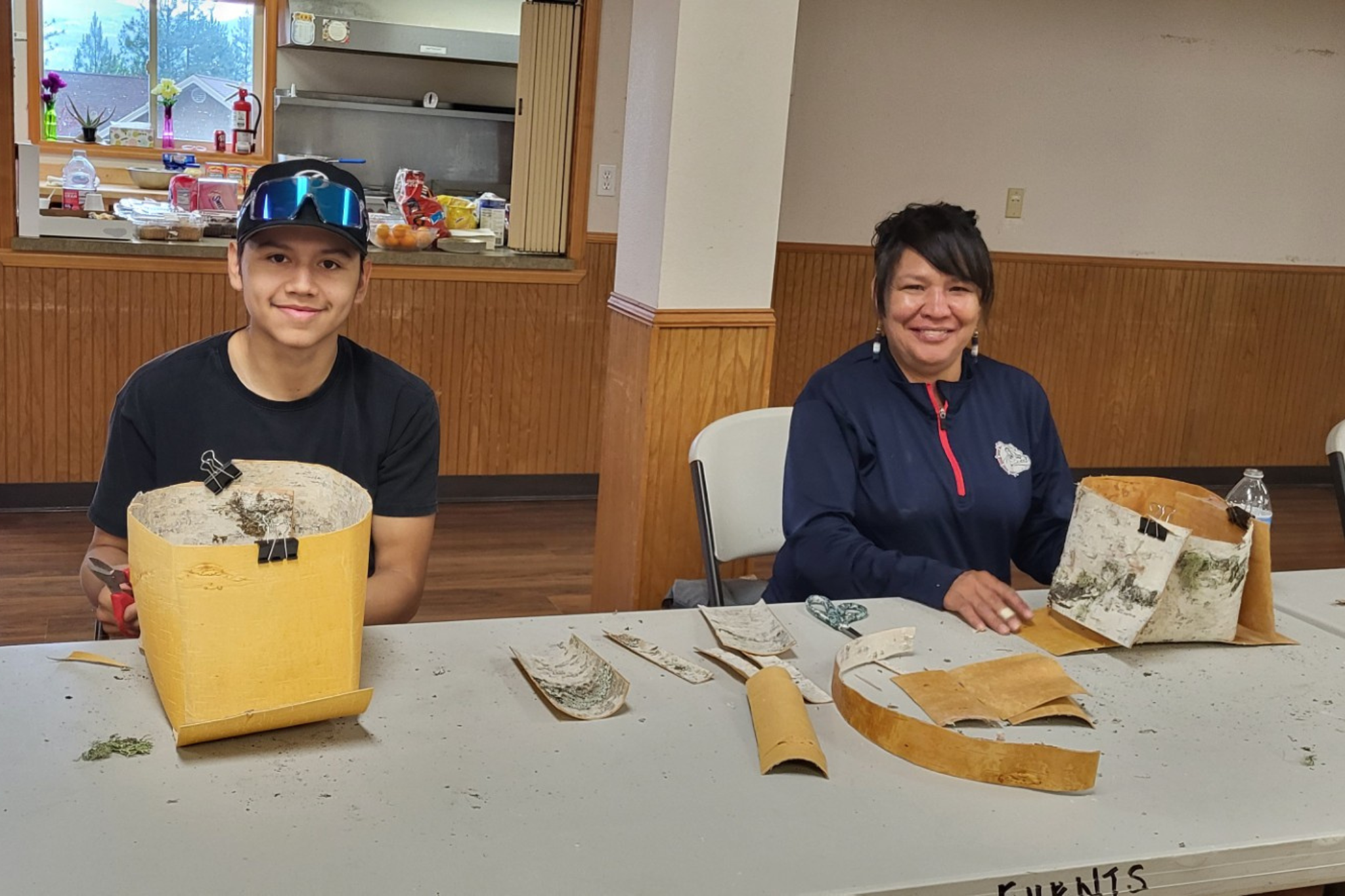
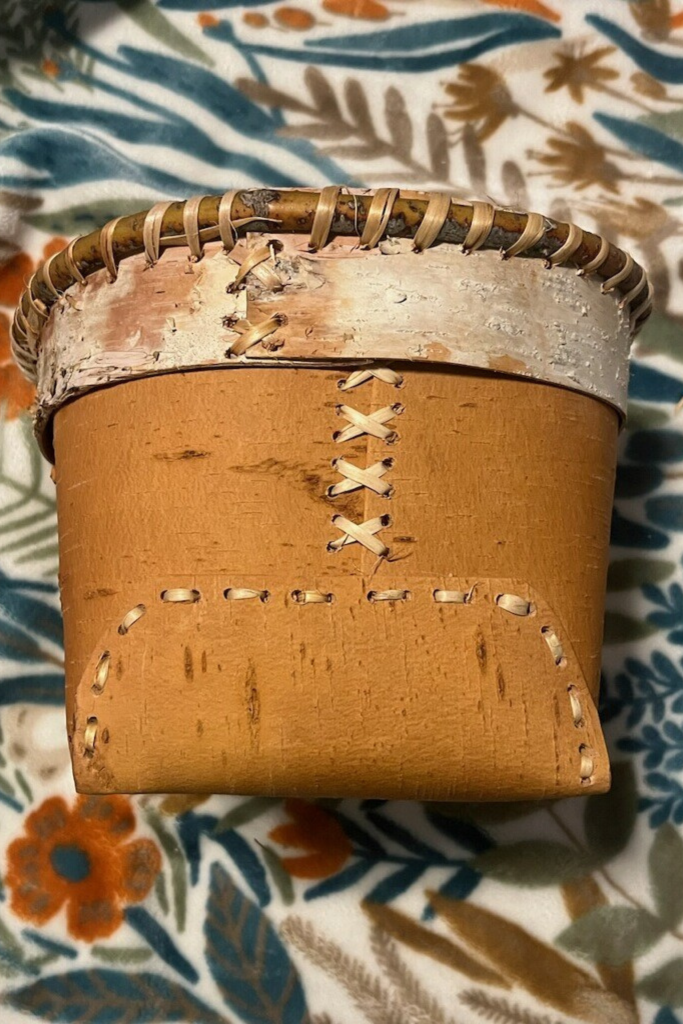
Birch Bark Basket Weaving, Kalispel Indian Community, Culture Department.
Almost every culture has a creation story that begins with a great flood. The Kalispel Tribe’s creation story takes place on their traditional territory at Lake Pend Oreille, known to many today as Coeur d’Alene Lake. When the flood was coming to an end and rocks started poking up around the edges of the water, the Creator took Eagle, Muskrat, Crow, Bear, and Coyote – and, of course, a human – and brought them down to the lake in a giant birch bark canoe shaped like a sturgeon nose. “That,” says Yolanda Bowman, the Kalispel Tribe’s Cultural Specialist, “is how we became known as Canoe People.”¹ Only a few generations ago, she recalls, “there was a point in time when you could look up and down the river and every single family had their own canoe – you could just see nothing but canoes.” Unfortunately, as time passed and Tribal elders passed over, the art of building sturgeon-nosed birch bark canoes – a cultural practice at the very heart of what it means to be Kalispel – was lost.
With the help of Community Accelerator Grant funding, the Tribe’s Culture Department is now working to bring it back.

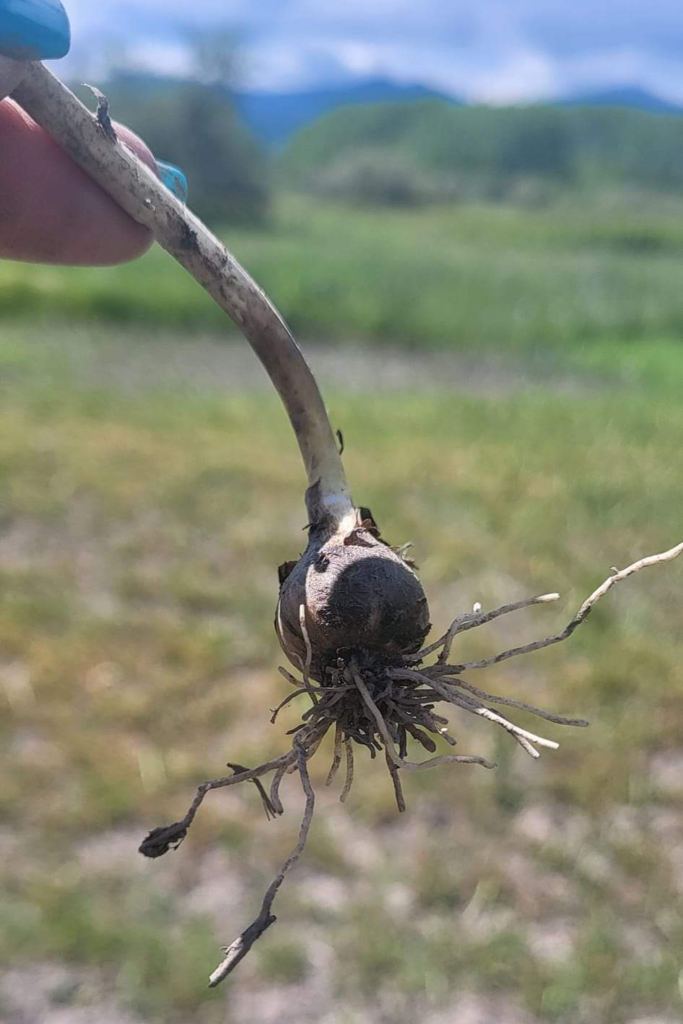
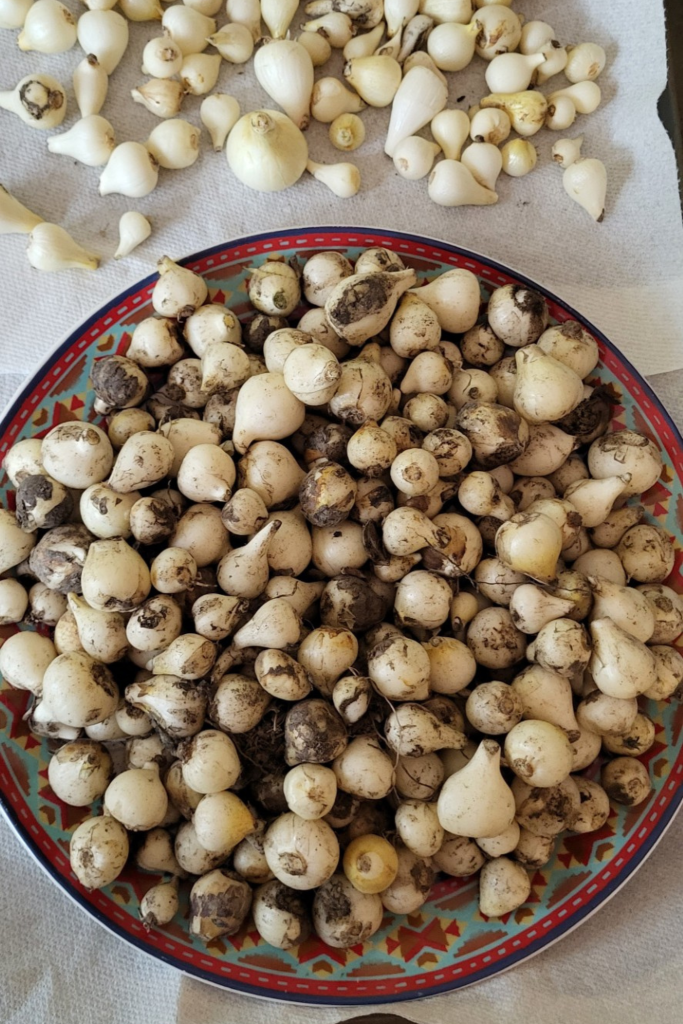
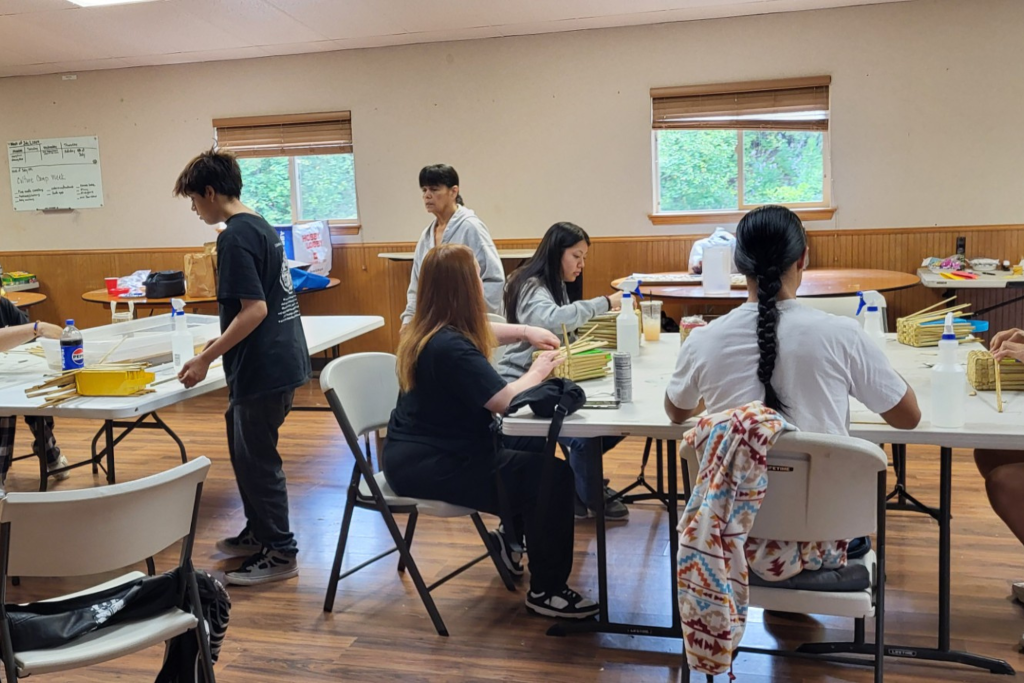
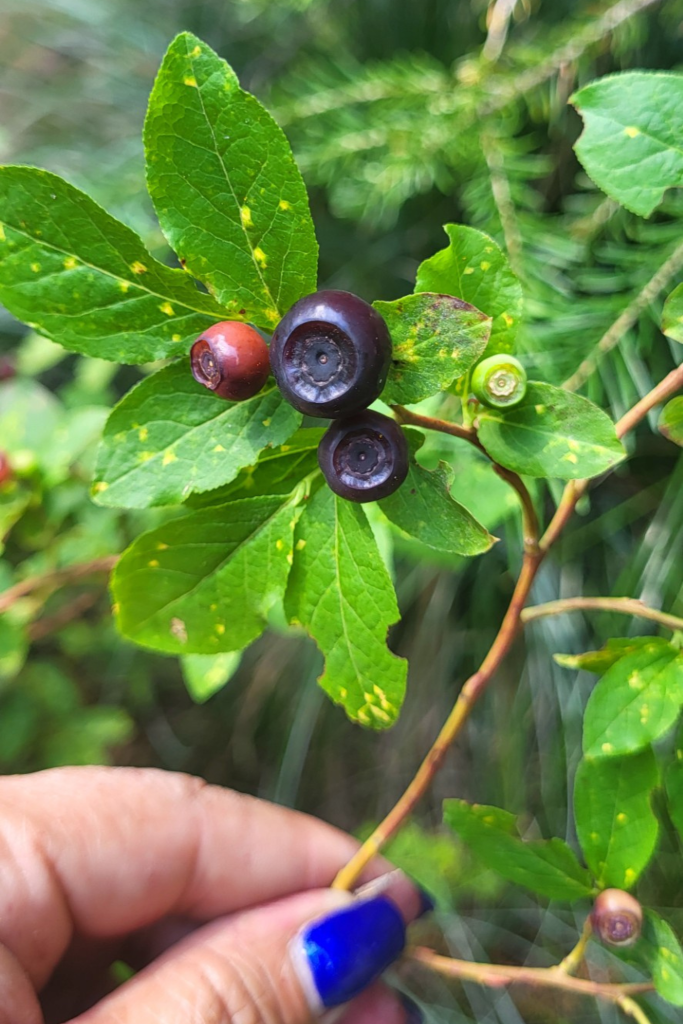
Until recently, the Culture Department was doing the best it could with a staff of four and limited resources. Funding fluctuated significantly from year to year, and planned programming often had to be delayed or canceled, making it difficult for participants to feel fully invested. Today the department has a staff of 12 and the financial stability to commit to and carry out the programs that they believe in, a change in fortunes that Yolanda credits almost entirely to the Community Accelerator Grant.
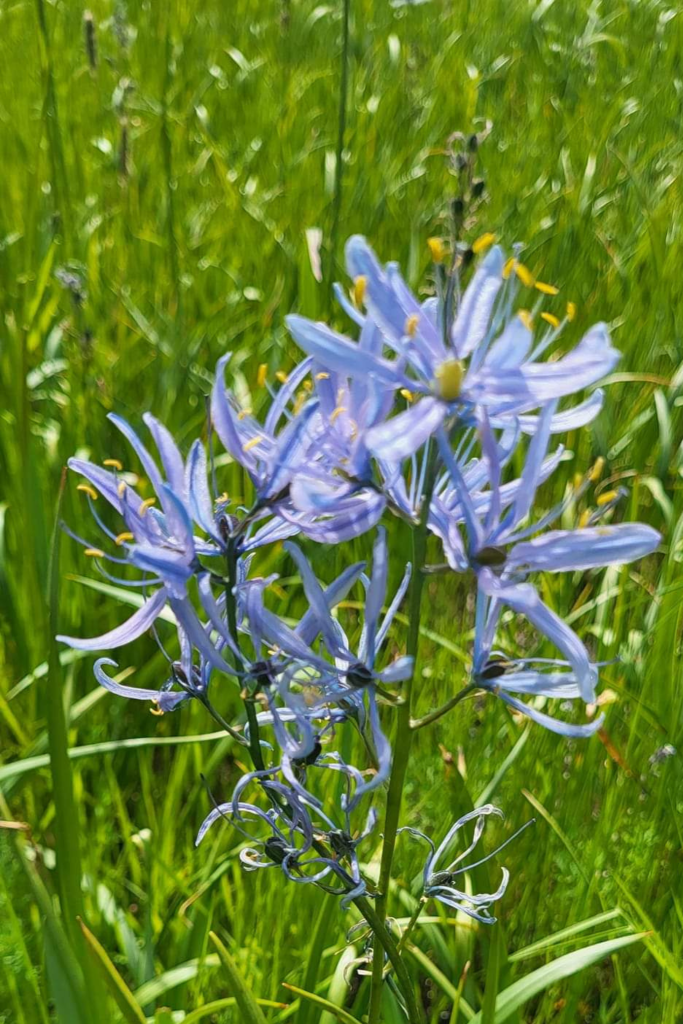
The Culture Department currently offers ongoing classes in traditional Kalispel arts such as beading, weaving, basketry, sewing pow-wow regalia, plant identification and harvesting, and preparation of Indigenous foods and medicines. Class sizes range from 10-15, and participants range from school-age children to elders. As approximately 1/3 of the Tribe’s 470 members live on the reservation,1/3 in Spokane, and 1/3 elsewhere in the world, staff frequently make the hourlong drive to Spokane to run classes there, as well as at schools around the region. Several staff members are also learning how to use social media to better reach their highly dispersed community with detailed, step-by-step how-to videos. Yolanda says her team’s greatest challenge has proved to be getting people in the door – and making sure they come back. “We compete with work, sports, and pow-wows, so we really try to make our classes count. We provide all the supplies, and we don’t charge. We make sure we provide meals, and we encourage adults to bring children with them – we’ll teach the kids or keep them occupied if needed. We’re just trying to find a way to keep our culture alive.” The Community Accelerator Grant funding the Culture Department has received over the last two years has fully covered their costs for gas, class supplies, teacher training, and participant meals.
We’re just trying to find anyone who’s interested, anyone who wants to learn. If you want to learn it, then we’ll teach it, because that means one less chance of it dying.
Yolanda Bowman, Kalispel Indian Community
For the Kalispel Tribe, teaching these skills isn’t just about passing on traditions – it’s about teaching the history of their people. Some of Yolanda’s most meaningful classes have taken place at treatment facilities and wellness centers, where she says she often encounters “a lot of our people who don’t know a lot of our own history. We’ll talk to them about homesteading, about how we used to be one tribe with the Flatheads but the government came and split us up, how we got a tiny little piece of land nine miles long and two miles wide. A lot of Natives carry such deep generational trauma. We teach that we have to know our history in order to move past it and heal. Once you start getting past that hurt, you can start moving forward, you can start loving everybody.” This generous, community-forward ethos is also applied to their classes at large, which are all completely open to not just tribe members, but the general public.
Over the last decade, Kalispel Tribe members have begun going on intertribal Canoe Journeys, annual events undertaken by many Indigenous canoe cultures of the Pacific Northwest. They have typically paddled cedar dugout canoes, but this year finally connected with a canoe specialist familiar with birch bark techniques, who has been teaching Culture Department staff how to use their traditional materials. “And hopefully next year,” says Yolanda, “that’s how we’ll be out on the river.”
¹Yolanda credits this story to Kalispel Elders Alice Ignace Blackbear and Francis Cullooyah.