- About
- Support
- Celebration of the Arts
- Grants
- Programs
- News & Media
- Advocacy & Research
- 2025 ArtsFund Grantee Listening Sessions Program Overview
- Livability Impact Study of the Arts
- Policy & Advocacy Resources
- Building for the Arts
- How are the Arts Being Funded Today?
- What do Expenses Look Like Today?
- COVID Arts Sector Impacts
- COVID Cultural Impact Study
- Social Impact Study
- Economic Impact Study
Port Gamble S’Klallam Foundation – 2025 Accelerator Case Study
Port Gamble S’Klallam Foundation
Organization Name: Port Gamble S’Klallam Foundation
Website: www.sklallamfoundation.org
Budget Size: $1M – $2.5M
Region: Northwest
County: Kitsap
Artistic Focus Area: Cultural Heritage/Other (Tribal and folk cultural arts)
Community Accelerator Grant Awards: $23,800 in 2023, $17,500 in 2024, $17,500 in 2025
Primary Impact Category: Financial Impact, The Future
Mission Statement: The Port Gamble S’Klallam Foundation is dedicated to improving the quality of life for Port Gamble S’Klallam tribal members while increasing the understanding of the Tribe’s rich cultural heritage with people who reside in the Puget Sound area and visitors from far and wide.
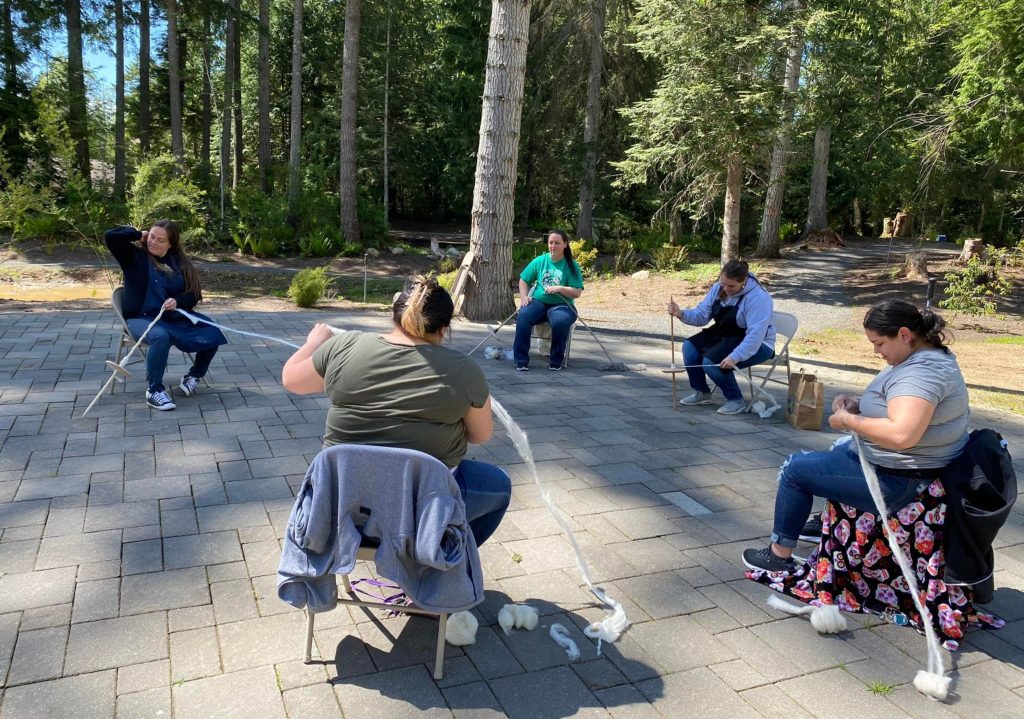
When Andrea Dolan-Potter, the Port Gamble S’Klallam Foundation’s Executive Director, was growing up in Kitsap County, Heronswood Garden—a 16-acre experiment in garden design and plantsmanship helmed by local horticulturalist Dan Hinkley—was just starting to flourish. Andrea spent much of her childhood at a friend’s grandmother’s home on the Port Gamble S’Klallam reservation, and fondly recalls a Tribe that, too, was starting to flourish. The government was very young and Tribal infrastructure was limited, but there was a warmth and kindness to life on the reservation that, decades later, drew Andrea back as an employee. “S’Klallam culture is hospitality, welcoming the other, seeing the wider community as extended family. It’s baked into millennia of Tribal culture,” she shared with ArtsFund.
In the meantime, Heronswood garnered acclaim as a nationwide boutique plant nursery before a corporate buyout and subsequent financial difficulties led it to close its gates to the public in 2006. In 2012, it was purchased by the Port Gamble S’Klallam Tribe, and the garden began its remarkable transformation into an ethnobotanical exhibition of S’Klallam culture.
Heronswood Garden Today
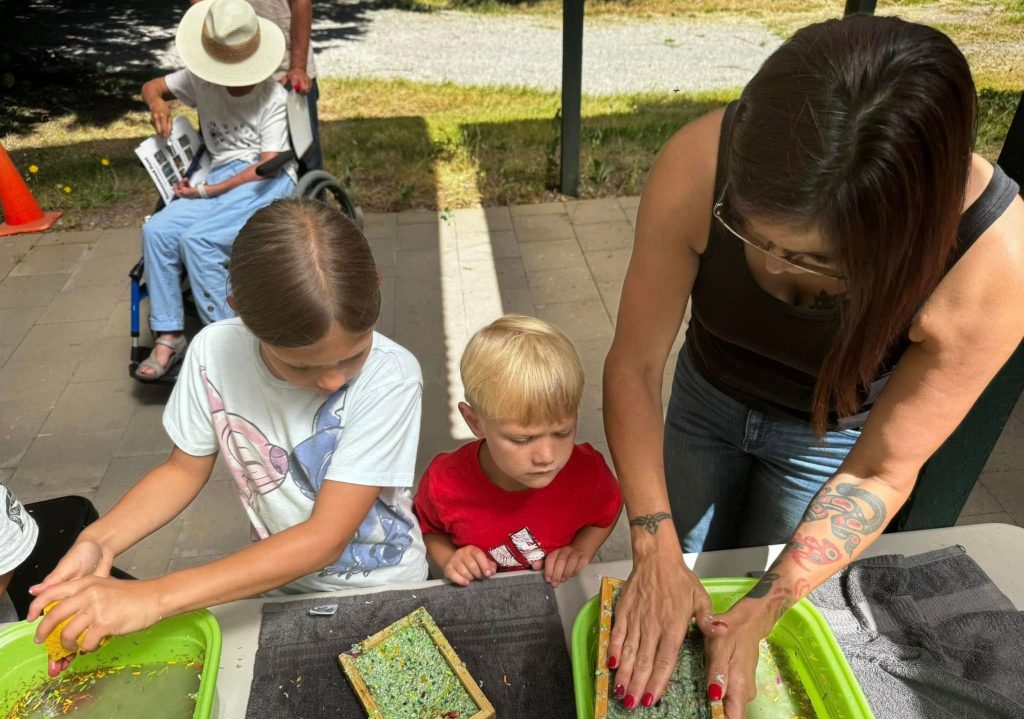
Today, Heronswood draws botany enthusiasts from around the world, boasting over 8,000 plant varieties across six distinct gardens. But it also serves as a staging ground for a variety of cultural programs, including classes, outdoor programs for families and children, and artist demonstrations by S’Klallam beaders, cedar weavers, painters, textile weavers, and wood carvers. These programs serve both to make traditional Tribal practices more accessible to Tribe members and to educate the general public. “We learned in talking with visitors that people were coming to the garden with specific questions about S’Klallam culture and a real desire for conversations with culture bearers,” Andrea says, “but they didn’t want to be intrusive or overly nosy.”
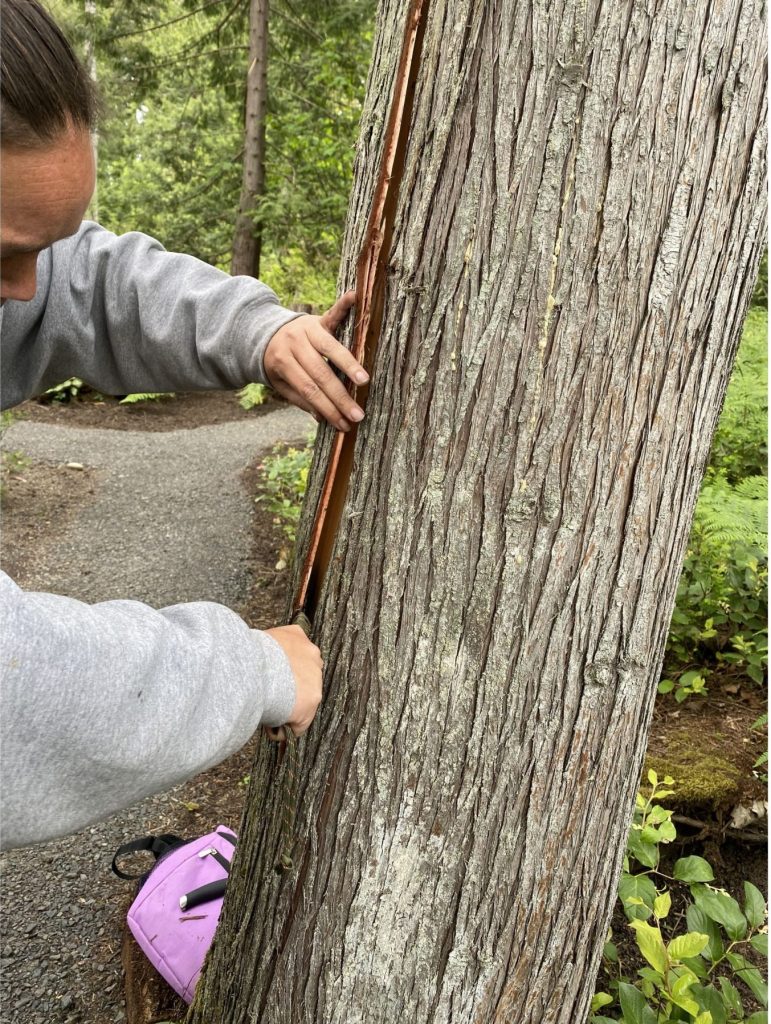
In the programming model the Tribe and Foundation have jointly developed, S’Klallam artisans demonstrate their art forms, offer hands-on teaching to fellow Tribe members, and invite visitors to observe and ask questions. This approach allows the Port Gamble S’Klallam to share their knowledge and history while safeguarding practices sacred to the Tribe, such as harvesting cedar, a process that involves pulling strips of bark from trees and curing them before weaving the strips into pieces such as hats and baskets. “The thing with cedar is, you need to know the age of the tree,” says Andrea. “You need to know the time of year. You need to know the right texture, the length, the stopping point. Otherwise, you could kill the tree.” She says visitors have been appreciative and respectful of this model: “People understand that, when doing a deep dive into somebody’s cultural practices, there are guardrails up front. They don’t have a problem with it. Everyone comes to Heronswood with good hearts and good hands.”
The Community Accelerator Grant in Action
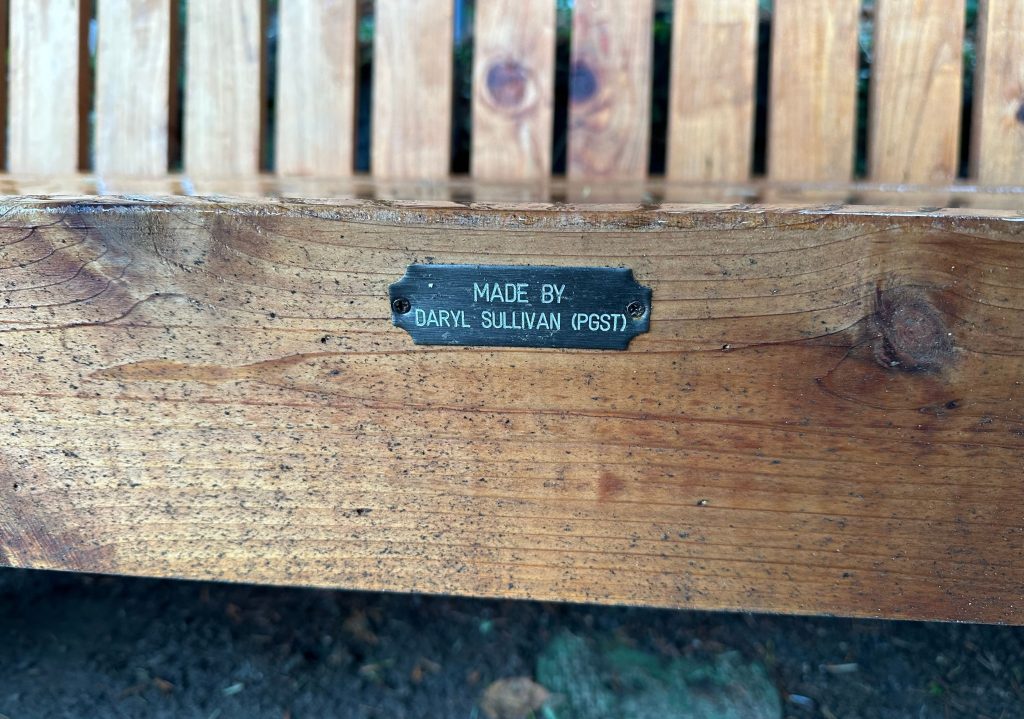
Community Accelerator Grant funding has allowed the Foundation to use S’Klallam cultural practices in a new way—to support the garden’s growing access needs. Kitsap County, where Heronswood is located, skews demographically older than the rest of Western Washington, and Andrea and her staff have seen that reflected more and more in the garden’s visitorship. “Increasingly, our programs are being utilized by elders, retirement communities, and memory care communities,” she says. “We want to make sure our outdoor spaces are accessible and welcoming to people of all abilities.” Until recently, there was no seating available on the garden grounds, meaning Foundation staff often found themselves tasked with retrieving visitors unable to navigate the long walk back to the entrance or to comfortably sit and rest on the grass. Recent Community Accelerator Grant awards have funded 12 cedar benches and 4 Adirondack-style chairs designed and built by Tribe artisan Daryl Sullivan, as well as a Tribe-led project to regrade the pathways, making them more accessible to visitors using canes, walkers, and other mobility devices. “Elders have told us that they feel safer here knowing the paths are less steep and there are places where they can rest,” says Andrea. “We’ve had families visit who can’t all walk the garden, and now there’s a place for those who can’t to sit and read a book. We’ve seen more people come, more people participate in our programs, because of this support.”
And, while all Community Accelerator Grant funding is completely unrestricted, Andrea says the fact that the money came through ArtsFund challenged her team to approach these projects through a more creative lens than they might have taken otherwise. “If I had just been given a mandate to make the garden more accessible,” she muses, “I probably would have contacted a landscaper.” Instead, she reached out to Tribe members with the knowledge necessary to blend art and infrastructure into a process deeply aligned with the hospitality at the heart of S’Klallam culture. “While we were regrading the paths, Tribe members were saying to me, ‘We love being able to do this for the garden because it makes it a more hospitable place to welcome our neighbors,’” says Andrea. “There was so much joy to the process.”
“Unrestricted funding pays dividends in ways that go far beyond the actual dollar amounts distributed. First, unrestricted funds allow organizations to chase serendipity. If new projects come up that are exciting, novel, responsive – you have the means to take advantage of that momentum. Second, they allow you to invest in things that funders might not find sexy, but that you know are mission-critical. Third, they make it possible to reallocate funds from one project to another without putting stress on the rest of your budget, which means you can invest fluidly in whatever your community is asking for and is proving that they want.”
- Andrea Dolan-Potter, Port Gamble S’Klallam Foundation’s Executive Director
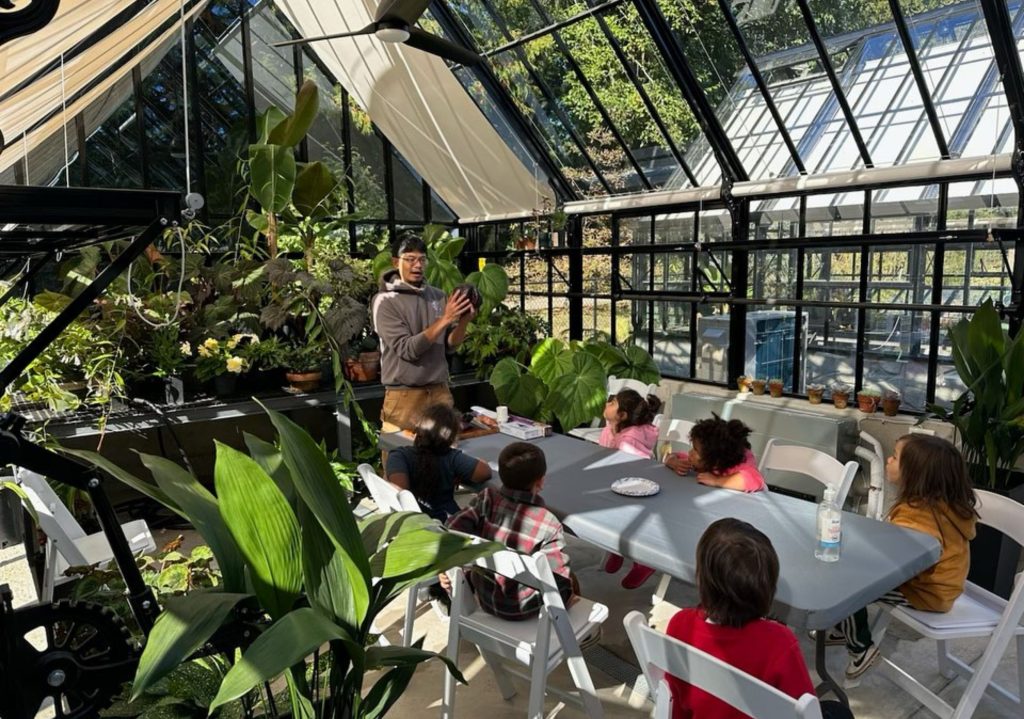
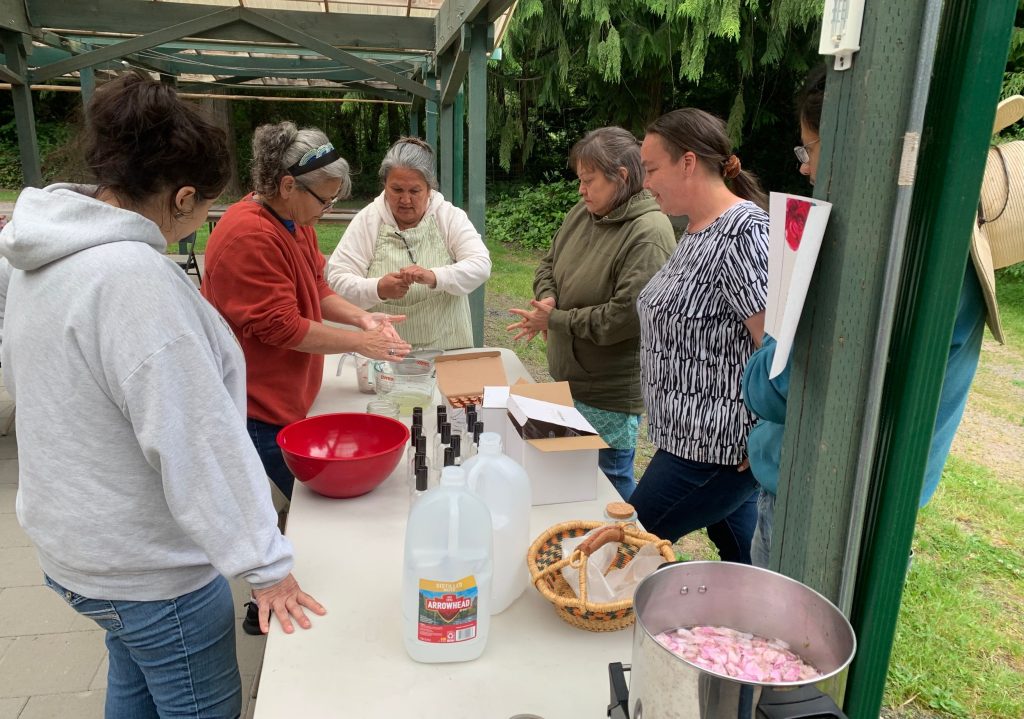
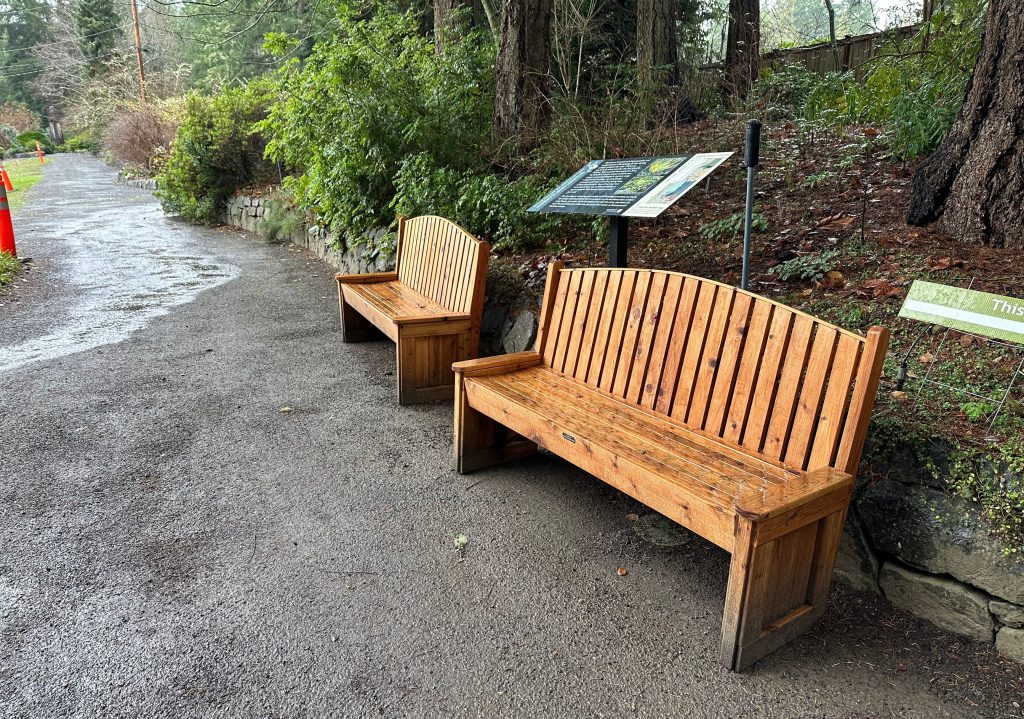
The Port Gamble S’Klallam Foundation has cherished its three-year relationship with ArtsFund and Allen Family Philanthropies through the Community Accelerator Grant, and Andrea also credits the program with building the Foundation’s statewide community. “It’s been really delightful,” she says, “being in such a diverse cohort [of grantees] – different art forms, different regions, Tribal, non-Tribal, different cultural backgrounds – but all working together under the same umbrella. We have been strengthened by the association, publicly and privately.” While the Foundation has been able to leverage grant awards towards funding from other grantmakers, including ArtsWA and the Association of Tribal Archives, Libraries and Museums, Andrea thinks the most impactful thing the Community Accelerator Grant has offered her organization—and Washington State at large—has been the opportunity to shift public perception of what it means to be an arts organization. “Sometimes people think of the arts as discrete islands—the opera, the ballet, the painter’s guild,” she explains. “This program is a reminder that the arts happen in all places where people exist side by side. Arts are not frosting on the cake. Arts are not discretionary. Arts are fundamental.” She envisions a Washington in which the arts are celebrated for the way they support and integrate into every activity of life – much in the way a set of hand-crafted cedar benches are now quietly but meaningfully augmenting the safety, accessibility, and beauty of Heronswood Garden.