- About
- Support
- Celebration of the Arts
- Grants
- Programs
- News & Media
- Advocacy & Research
- 2025 ArtsFund Grantee Listening Sessions Program Overview
- Livability Impact Study of the Arts
- Policy & Advocacy Resources
- Building for the Arts
- How are the Arts Being Funded Today?
- What do Expenses Look Like Today?
- COVID Arts Sector Impacts
- COVID Cultural Impact Study
- Social Impact Study
- Economic Impact Study
TwispWorks – 2025 Accelerator Case Study
TwispWorks
Organization Name: TwispWorks
Website: twispworks.org
Budget Size: $750K – $1M
Region: Central
County: Okanogan
Artistic Focus Area: Arts Service
Community Accelerator Grant Awards: $12,500 in 2024, $5,000 in 2025
Primary Impact Category: The Future
Mission Statement: The mission of TwispWorks is to Start. Build. Grow. Together. Our vision is to cultivate the economic and cultural vitality of the Methow Valley, focusing on the arts, education, and support for small businesses.
In the heart of Twisp, a town with a population of 992 as of the 2020 census, stands a former U.S. Forest Service station. Built in the 1930s by the Civil Conservation Corps, the station was busy and bustling during the timber boom of the 1940s-1980s, but as the timber industry declined and the local mill closed its doors, the station was quietly vacated. When the property went up for auction in 2008, the local community rallied to purchase the 6.4-acre site and the 17 buildings that make up its campus. In the years since, the station has evolved into TwispWorks, a model for rural economic and cultural development with the arts squarely at the center of their work.
“We’ve been so fortunate,” says Economic Program Director Patrick Law, “to have had community participation from the get-go. We hosted a lot of community design charettes where neighbors, municipal representatives, and local stakeholders came and sat around a table and talked about what was possible here. And since then, we’ve had generous donors and volunteers who have helped with landscape design and all sorts of other things to make it just a very lovely little piece of the Methow [Valley].” After many years of careful rehabilitation and repurposing the old buildings, today, the campus is home to 36 tenant partners, who produce artistic work, offer classes and workshops, and sell their creations within its walls. Much of the work made on site feels distinctively and singularly of Twisp, such as textiles pigmented with dyes made from local flora, leatherwork and saddles made by a longtime horse packer, and reusable bags designed to promote the resourcefulness and self-sufficiency characteristic of rural communities. “This valley,” he says, “has a long history of artists and makers. The town of Twisp has carried that legacy forward, and we like to think that by supporting all these makers and driving the creative economy as much as possible, we’re really helping make TwispWorks a big part of that culture.”
TwispWorks at the Heart of Twisp
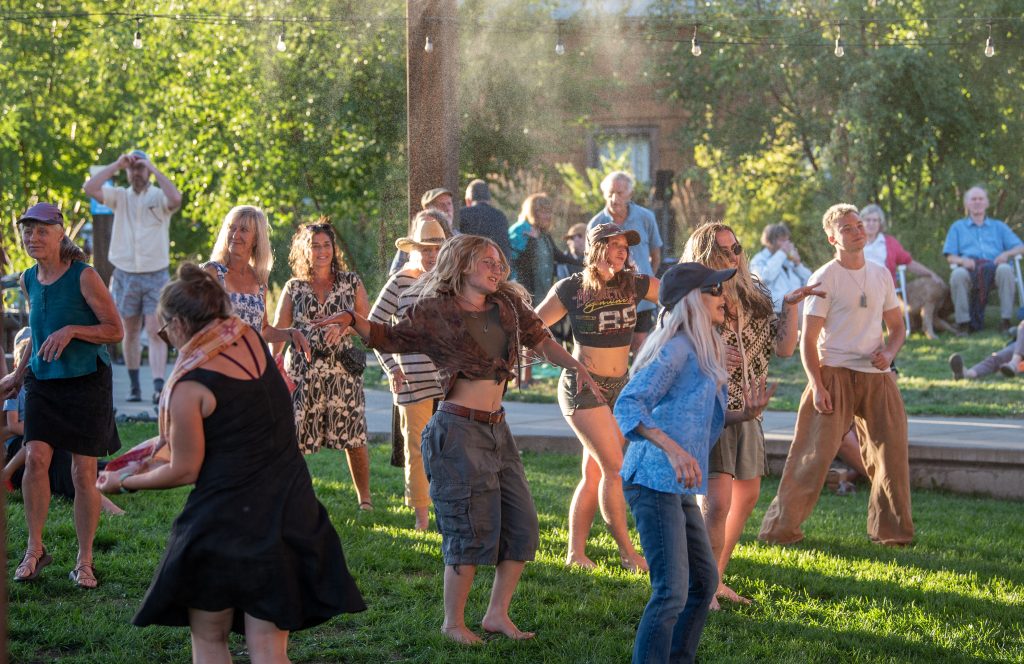
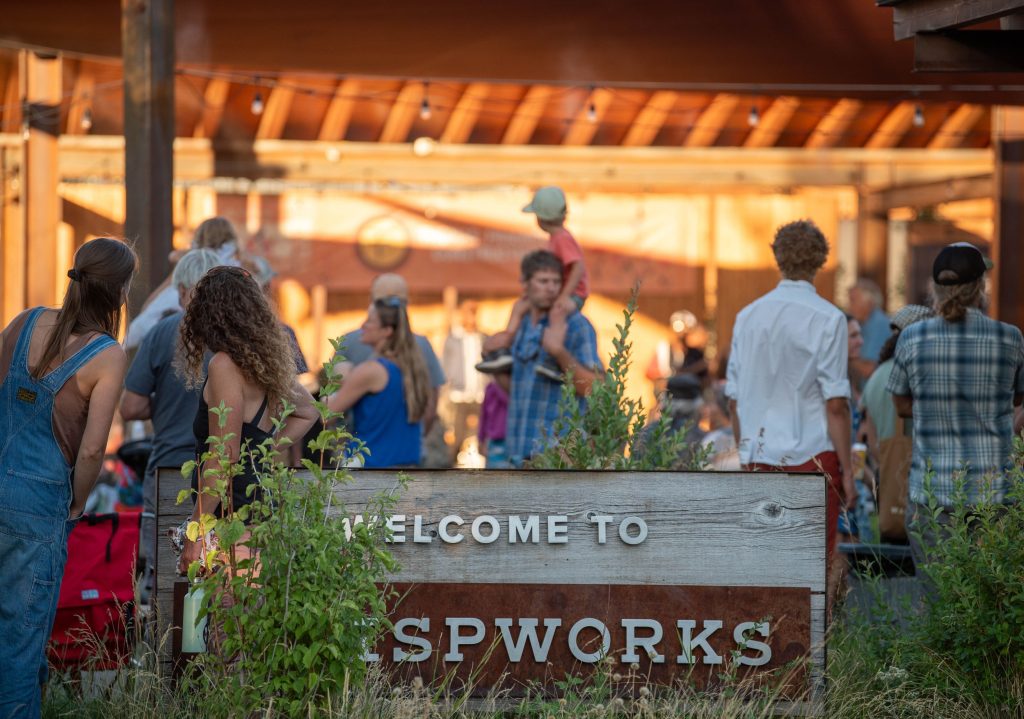
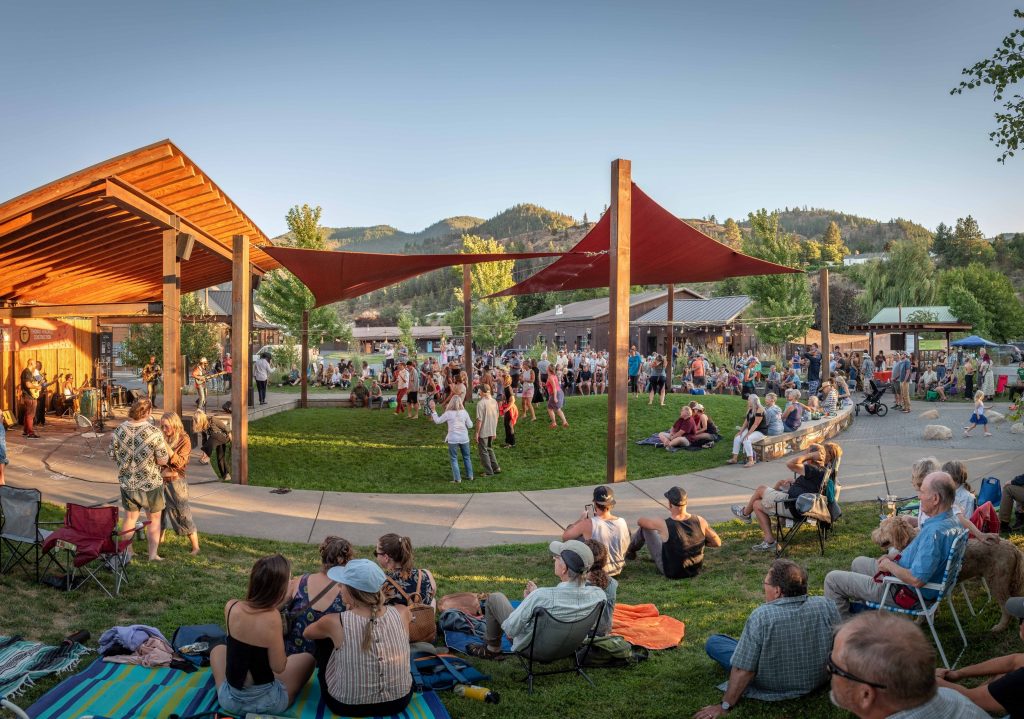
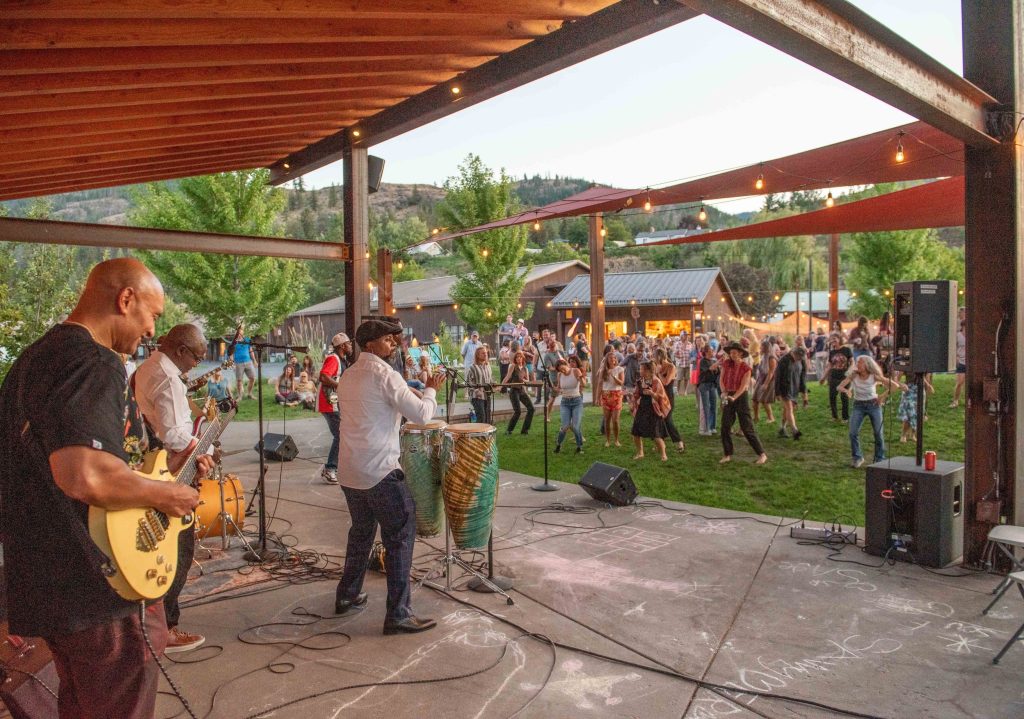
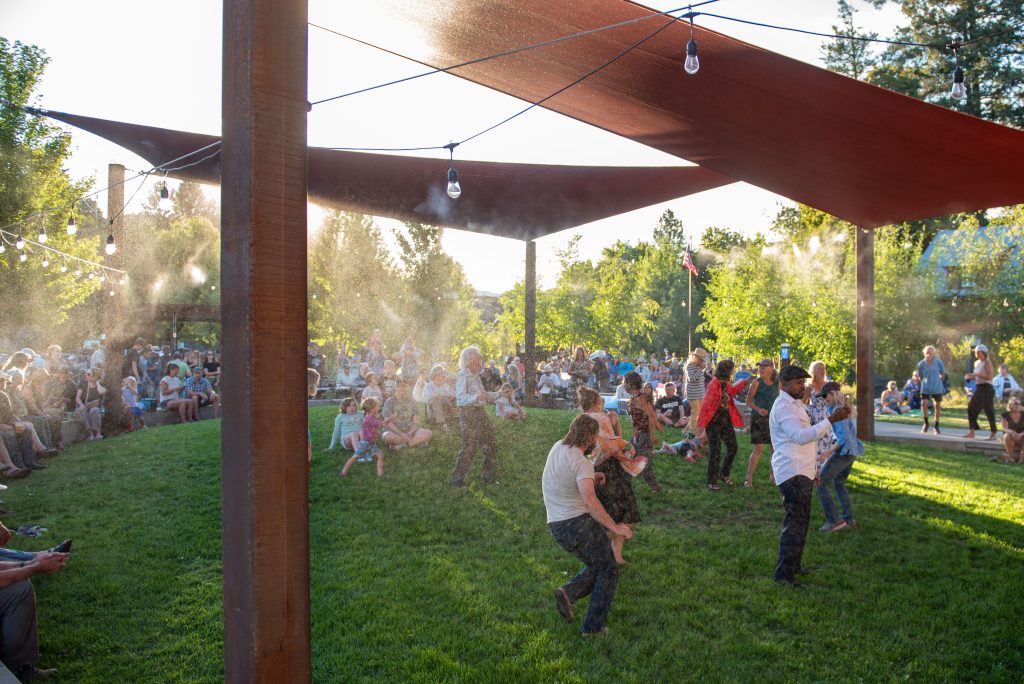
One of TwispWorks’ preeminent goals at present is making their campus more open and approachable to the public. As a Forest Service station, TwispWorks was constructed to be insular and prioritize function over form. In recent years, they have focused on improving pedestrian access with sidewalk installations and commissioned a muralist to help the campus appear more inviting from nearby roadways. With support from the Community Accelerator Grant, they were also able to invite people onto the campus through a free Fourth Friday Concert Series that ran April – October 2025. “We held the series in our outdoor performance pavilion and invited anybody who wanted to come,” says Patrick. “We had some really amazing, high-caliber performers. As an organization that is very committed to supporting artists, we consider it a requirement to pay musicians what they’re worth. Being able to use this funding to pay local artists a living wage? I see that as a real value statement.”
One of the unexpected benefits of the concert series, according to Patrick, has been the opportunity for TwispWorks to serve a more diverse community. “Free events make it as low-barrier as possible for people to come and enjoy cultural happenings,” he says. “People are becoming more aware of us, and so we’re starting to pull people in from surrounding regions. I think the fact that we have been able to reach an audience of all ages, backgrounds, and geographies has been a direct result of this funding.”
“As we continue to build out our programs and attempt to make them sustainable year over year, this funding allows us to showcase some of the successes that we’ve had, and that helps us find new grants, new donations. It really does have a cascading waterfall effect. It provides for our events and programs, but it also is a catalyst for getting more people excited about supporting us through their donations, through grant funding opportunities, through volunteering, and through just showing up.”
- Patrick Law, Economic Program Director
The Waterfall Effect
As TwispWorks continues to successfully market its offerings further afield, Patrick and his team are also thinking—constantly and conscientiously—about how their mission serves the health and wellbeing of their town. “Recreation and natural beauty have always drawn a lot of tourists to the Methow Valley,” says Patrick, “but I think we’re starting to see more and more people who are seeking out Twisp because we showcase artists and makers, and in collaboration with a lot of other nonprofits here, we’re working to really put Twisp on the map as an artistic destination. People have been laying the foundation for that work for a long time, but it really does feel like there’s this critical mass of awareness that’s coming.” And that shift doesn’t just apply to tourism: Patrick knows several people who have been so drawn to Twisp’s scrappy, independent, creative identity in recent years that they have moved in, put down roots, and started families.
There are, of course, challenges to any small community’s growth trajectory that cannot be addressed through art crawls and chainsaw carving festivals alone. Patrick notes that gentrification “is something that we wrestle with often, and that I think is going to continue to be a big issue here over the next several years.” He is, however, optimistic: “There’s a lot of open dialogue already underway, which is half the battle.” Looking over the TwispWorks campus at buildings and acreage that was once home primarily to loggers and firefighters, he reflects on the past and future of a place he clearly loves dearly: “Like many of Washington’s rural economies, Twisp’s economy in the past was based on extraction industries. I don’t want to discount those, because they helped shape this place in some positive ways. But as those continue to fade away, our creative economy is how we can continue to be viable.”